


Life Behind The Seawall - Tohoku
- Season Tse
- Nov 2, 2018
- 2 min read


For my first year of master at London Met in 2015, my unit visited several places which suffered severely from the 2011 Tsunami in Tohoku area, North East of Japan. At the time it was 4 and a half years since the disaster happened, when we visited at the time we could still see the towns were in the process of recovering from the disaster.

I think what brought me back mainly was the people I met during the trip. Although we were strangers at first, they were very welcoming and invited us to their houses for a cup of tea and local snacks. Despite they have lost their families, friends and neighbourhood, I could sense that they have so much hope for the future, their positivity and stories have really touched me and inspired me.
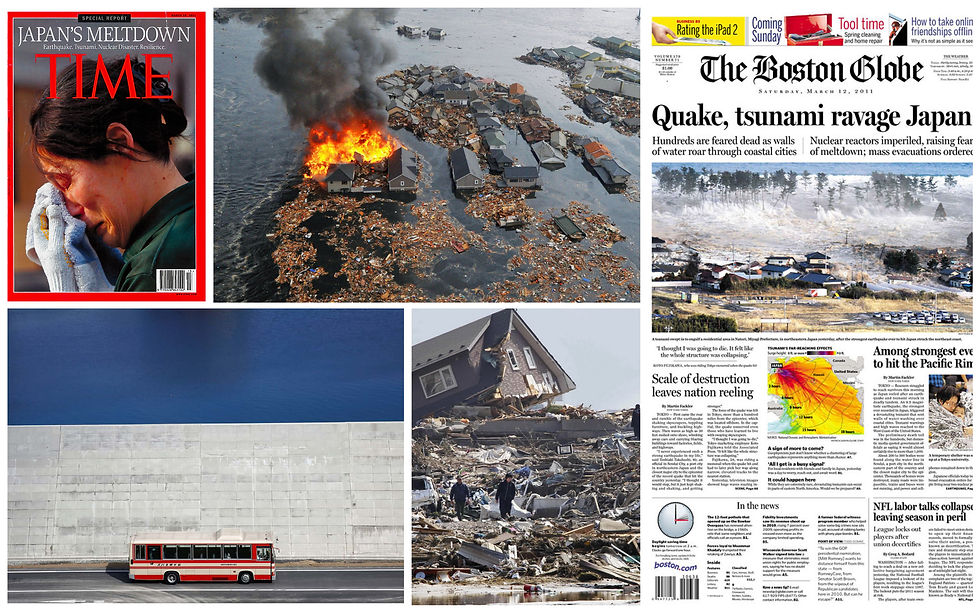
Another reason which brought me back was, in terms of the reconstruction of the towns I found it very interesting and very challenging matter. The tsunami prevention infrastructures created by the government and local government were done in an incredible scale, 400km - £9.1bn of seawall was made along the coast and mountains were cut to create more high level land for housing developments. I have always had doubt with such intrusive approach and this time it was a good opportunity to find out how the locals and I feel about it

On Friday 11th March 2011, local time 14:46. The east coast of Japan witnessed a 9.1 magnitude earthquake, which lasted about 6 minutes, followed by a tsunami with heights up to 40 metres which devastated the region of Tohoku. It was confirmed with more than 20,000 deaths, 6,000 injured and 2,500 missing. With further damages 400,000 buildings completed collapsed or ‘half-collapsed’. The ecological and emotional loss of the event are immeasurable.
Although it was my second time in a post-disaster area and have seen many photos and watched a lot of videos when it struck, still for me it is hard to comprehend what happened on that day.
When I was planning the trip it was actually a very difficult decision where to travel to as there are so many places I hoped to visit. Initially, I have booked a tour with Real Fukushima in Fukushima to see the abandoned towns and see the nuclear reactor from a distance, however the tour guide came back to me at a very late stage and there wasn’t enough time to for it. I was going to go to Kamaishi 釜石市 in the Iwate Prefecture because famous Japanese architect Toyo Ito, he was heavily involved in the masterplanning and redevelopment of the town, however it was too far north and would spend majority of time traveling on train.

At the end I have chosen 4 main places - Nobiru, Ishinomaki, Kesennuma & Rikuzentakata to go for my five days trip, each area has very different characters and their unique stories about the recovery process.


Comments